
Most leadership development is built for a different problem than the one you have.
Internal L&D is built for manager training.
Enterprise platforms are built for scale.
Neither is built for one leader, at one threshold, inside your business.
We built a method for exactly that — and it runs the same whether you're investing in one leader or ten.


Three things change.
You'll see all of them.
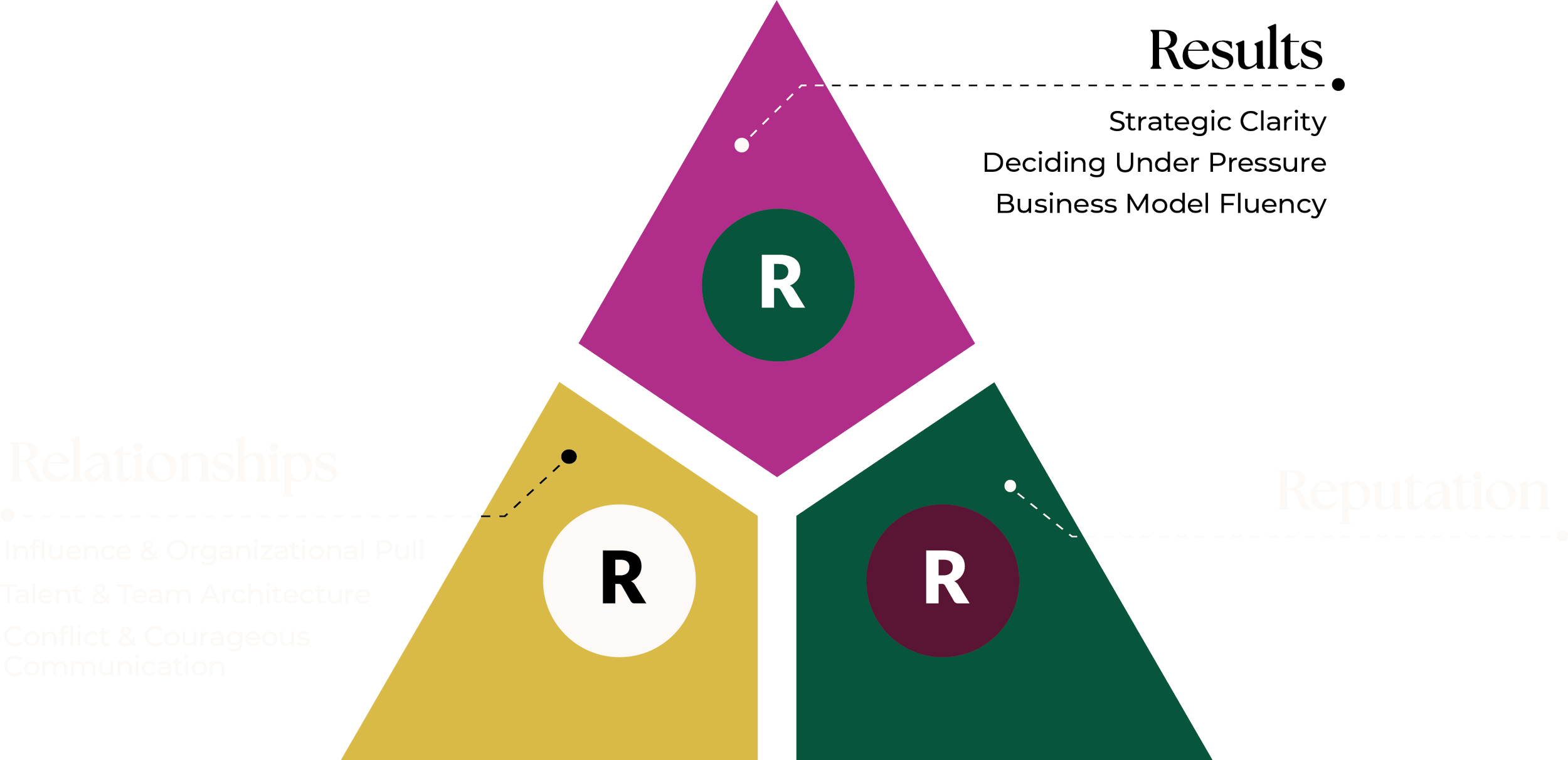
Results
Better decisions, made faster, with less of your input. They stop bringing you options and start bringing you a recommendation.
Relationships
Better decisions, made faster, with less of your input. They stop bringing you options and start bringing you a recommendation.
Reputation
Their name comes up in rooms they're not in. That's what makes the next promotion someone else's idea, not your campaign.
Most development work stops at the first one. Results alone don't move anybody to the next altitude — they're the price of admission, not the differentiator.
We build all three at once.

Business judgment and leadership capability, built at the same time.

Most coaching picks a lane. Executive coaching works the interior — confidence, presence, self-management. Business training works the exterior — finance, strategy, negotiation. Your leader needs both, and needs them connected.
Separating them is why so much development doesn't stick.
A leader with sharp analysis and no influence gets ignored.
A leader with presence and no judgment gets found out.
Nine dimensions, across the three things that move a career.
The Strategic Leadership Stack™ is our model of what separates a strong operator from a strategic leader. Every dimension is scored, and every one ladders up to Results, Relationships, or Reputation.
Relationships
Can they move people who don't report to them, and hold a position when it costs them something?
Influence & Org Pull
Talent & Team Architecture
Conflict & Courageous Communication
Results
Can they see the whole board, make the call, and connect it to how the business actually makes money?
Strategic Clarity
Deciding Under Pressure
Business Model Fluency
Reputation
Have they stopped performing the role and started occupying it — and does the organization hear them thinking past this quarter?
Leadership Identity
Reputation Management
Horizon Management
We work them in order, not all at once.
We work them in order, not all at once. Reputation doesn't hold if the decision-making underneath it is shaky.
The sequence comes from the diagnostic, not a syllabus.
The read comes before the plan.

Every engagement opens with the Strategic Leadership Diagnostic — 78 items scoring your leader across all nine dimensions, placing each one in one of four bands:
Developing, Emerging, Establishing, Leading.
What comes out is their Leadership Profile — the shape of where they're strong, where they're stretched, and where the work is. Not a verdict.
The Diagnostic surfaces patterns; it doesn't hand down a diagnosis.
The Profile is the starting point for a debrief conversation between your leader and their coach, where the pattern gets tested against what's actually happening in their role. That conversation is where development goals come from — grounded in your business context, not a generic competency list.
This is why we don't sell the instrument on its own.
A number without an interpreter is just a number.

You shouldn't have to wait until the end to know.
The industry standard for measuring coaching is participant satisfaction and self-reported goal progress. Neither tells you whether anything changed in the work.
We measure quarterly, on four things you can actually observe:
Decision quality
Are the calls getting better, and getting made without you?
Delegation
Is work moving down, or still collecting at their desk and escalating up to you?
Cross-functional alignment
Are they getting to yes with peers on their own?
Ownership clarity
Do they know what's theirs, and act like it?
Together they answer one question:
Is this leader operating at the altitude the role requires?
The Diagnostic is re-administered at midpoint and at close, so change is measured against a baseline, not remembered.
That gives you a decision point.
If the shift isn't happening, you'll see it early enough to make a different call.
We'd rather tell you honestly than keep an engagement running.
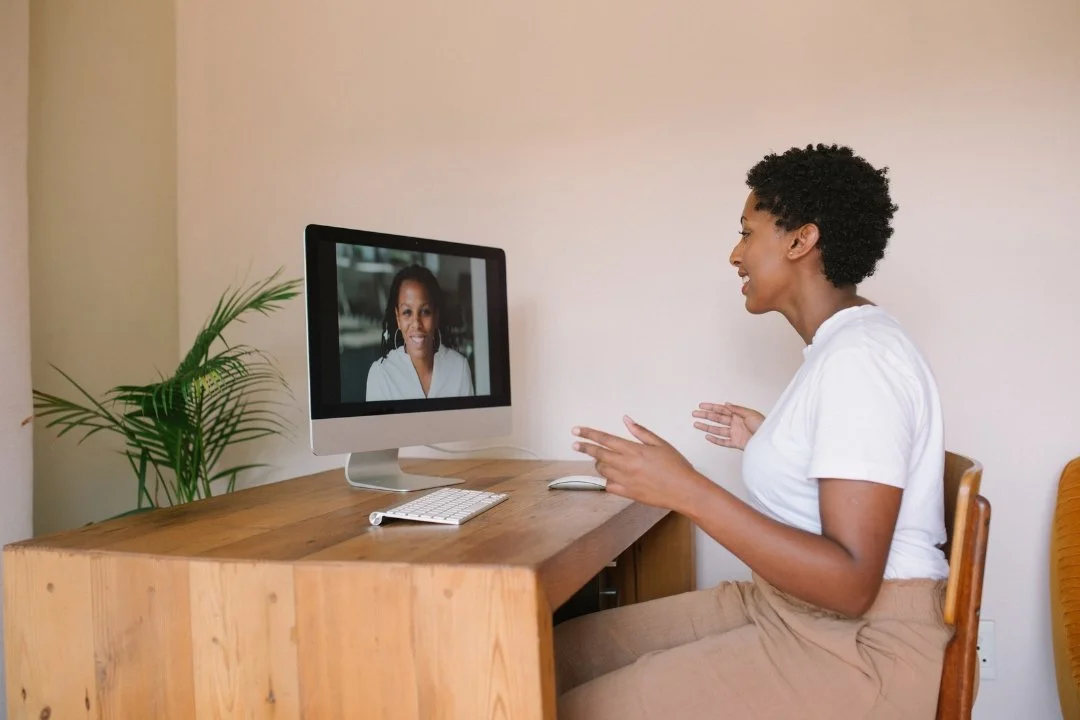
Personal doesn't have to mean small.
Individual diagnostics, individual sponsor calls, individual coaches. It sounds like something you can buy once.
It isn't. The method is what scales, not the calendar.
Every leader gets their own diagnostic, their own alignment call with you, and their own coach from the H&H Coach Collective — coaches trained on our method and on how consumer goods and retail organizations operate. The instrument is standardized. The measurement is standardized. What's personalized is the thing that has to be: the plan for that leader in that role.
A bench of five gets five development plans and one set of comparable data. You see where the gaps cluster across your team, not just where one person sits. That's a picture internal L&D can't give you and a platform Engagements run in phases with natural start and stop points, so you're never locked into a year of something that isn't working.

Now the only question is who.
If you've got someone in mind, bring us the situation.
If you're still working out what you're looking at, start with the Guide.